
VIDEO
C.S. Lewis, The Great Divorce, and a Retrospective of the 2025 Book List
What happens when you read C.S. Lewis's vision of purgatory through the lens of an entire year's worth of literature?
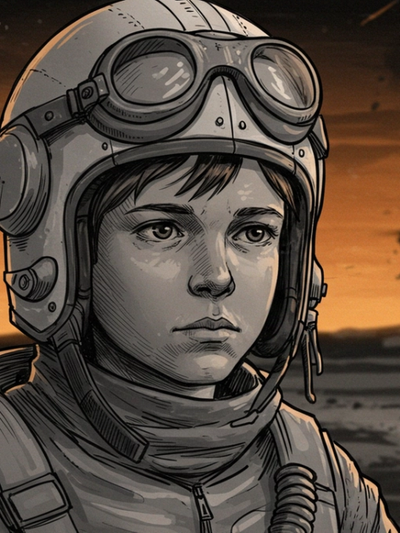
February 2025
Meeting Date: 2/24/2025
By Orson Scott Card
Moral Reasoning
Orson Scott Card's military sci-fi classic explores moral reasoning and Catholic ethics through the story of a brilliant child trained for interstellar war. A profound examination of just war theory and the dignity of the human person.
As an Amazon Associate, we may earn a commission from qualifying purchases made through our affiliate links at no additional cost to you.
"The morality of human acts depends on the object chosen; the end in view or the intention; the circumstances of the action. The object, the intention, and the circumstances make up the 'sources,' or constitutive elements, of the morality of human acts."
- Catechism of the Catholic Church (para. 1750)
Imagine a stalwart, fundamentally good young boy, the youngest in his family. The youngest of too many, with a faint whiff of illegitimacy. Loved, but also perhaps guiltily unwanted. He's brave and kind; he doesn't want to hurt anyone, but he seems condemned to a life of being put in positions where he has no choice, if he wants to survive. He's learned no one will come to his aid. When the wild things come for him, he's got to rely on himself and do things no child should be expected to do. When an ultimate, overwhelming enemy threatens his people, he watches the adults fail. Cowards, the whole lot of them. They're willing to take advantage of the innocent helpfulness of a child, to let him walk unarmed towards certain death. All he has is the skills he acquired by being abandoned to figure out his own way, when he should have been protected by adults. And now these same adults know he is their only option. A little boy, anointed even above the heads of his older siblings, to take on the enemy against overwhelming odds and save them all. To win, he must do what no child should have to do. He has to kill, and still somehow keep enough of his conscience afterwards to be the innocent hero. What kind of people would do this to a child?
This is a story of the young King David, destined to become their greatest pre-Incarnation ruler of Israel.
Did Orson Scott Card mean to reimagine young David amongst battleships in the stars? Probably not. But it is impossible to tell story about a child soldier with the weight of humankind on his shoulders without using the original as a template.
There are many differences in Card's version, of course. The most notable is that the adults in Ender's Game struggle with their empathy and compassion for the little boy. No such empathy is shown towards young David in the Scriptures. The adults in Ender's world are aware of their mercenary exploitation of a child. ENDER'S GAME is full of adults justifying the things they do to Ender, even admitting that there is no true way to avoid the reality of their sins. They can only hope that the end result sanctifies their evil. Their savior must have the innocent, hopeful malleability only found in a child. This is a world where the adults know they owe something to children, and that what they're doing is a violation of those duties. But the desperation of war and the possibility of extinction of the human species creates special circumstances where they must use the only course they believe could possibly lead to victory. Or so they tell themselves.
There is no such acknowledgement in the Scriptures for David. The adults who are willing to put a young boy against the giant Goliath, armed only with his slingshot, cannot even say they were out of other options. And David spent a lifetime being put out in the fields to look after the sheep, forced to slaughter lions and bears on his own, well before he was anointed. It was a role for a disposable child, youngest in a family that apparently already had enough skilled warriors. Even though the work of a shepherd exposed a child to unthinkable dangers, it didn't earn him anything but scorn from his brothers. David was trained to put his own life in danger and suffer terribly, presumably for the valid good of his household, but no one appeared to value his life.
The adults that trained Ender, on the other hand, saw him as far from expendable. The horrors of his training are frankly acknowledged and even agonized over. If they could come up with a different answer, they would have happily done so. Still, they reasoned, nothing would be done to Ender that wasn't directly related to making him the most effective commander possible. They didn't want to break his conscience or damage the fundamental goodness in him. The adults around Ender reckoned with the moral realities of what they were training a child to do, and their main concern was how to get him to do it without turning him into a sociopath.
Little comfort for poor Ender, but it was much better than what David got.
When David offered to battle Goliath, the adults around him seemed to fully understand it as a suicide mission. King Saul could not have thought David was their best chance of defeating the enemy. Saul didn't even know who David was. It is unclear what kind of moral reasoning Saul employed in deciding to throw armor on a random child and shove him towards certain defeat and death. It wasn't David's innocence that he valued, but his ignorance. How could David have any idea what Goliath could do to him? Sault didn't appear to wrestle with subjecting a child to horrors from which adult men shied. Ultimately if the kid died, then he died. Saul was entirely unconcerned with the state of young David's body or heart, before or after his battle with Goliath.
What do we do with the Biblical narrative of David as a seemingly throwaway child, used to a lifetime of being left to fend for himself under deadly conditions, thoughtlessly exploited as a child soldier, surrounded by adults who have absolutely no empathy or protective instinct towards him?
Well, David had God. The Scriptures, after all, tell us about the anointed one. The point of the story isn't how human beings treated David-he wasn't fighting for them anyway. His loyalties belong to the Lord. Everything he went through was about being prepared, by a loving heavenly Father, for the task of becoming the King of Israel. David's work as a shepherd, his terrifying experiences of fighting off wild animals with his bare hands, the contempt of his older brothers, even the murderously exploitive willingness of Saul to put him on the battlefield against a foe that no adult man would face...God, the good father, knew it wouldn't break young David. It would make him the best soldier and king he could be.
So then, God's moral reasoning is that the end justified the means, just like Ender's handlers decided? Did the Lord have no other choice but to use this child soldier? Did David's innocence have to be sacrificed to save humanity? God did as little harm as He could, didn't He? He must have tried to make sure that He didn't fundamentally damage David's goodness. But He had to do what was necessary. God's ends are always perfect, so His means are always perfectly justified. That must be a definitive example of applying Judeo-Christian moral reasoning, right?
Oh my, well now the comparison breaks down. That can't be right. But why not? How is God's plan for salvation, in shaping human beings towards a particular moral end, different from what the adults in ENDER'S GAME did to Ender and other children? God's actions must be different. Because what the adults did to Ender was monstrous by God's own standards.
God, Groff, and Geopolitics
It is worth noting here that Card never explains why religions are persecuted and banned in Ender's world. While Card left this thread dangling, it does make perfect sense. Every totalitarian or would-be totalitarian government in human history has tried to control or ban religion. This is not because they want to get rid of people's faith. It is because they wish to command it for their own use. If your people follow God, instead of trying to stamp it out of them, just convince them that YOU are God. You decide what is right or wrong.
A bit of history from a Catholic perspective: The "Wars of Religion" that plagued Europe from the fifteenth to early eighteenth century were fundamentally about political authorities chafing under the outsider moral authority of the Catholic Church. These rulers wished to claim the mantle of "Vicar of Christ" for themselves. Across Christendom they had long realized their subjects ultimately took their moral marching orders from the papacy. Kings and emperors only ruled by the blessing of the Church.
The moral measure of any action, include the actions of the monarch, were independently judged according to the Magisterium, which spoke for God. This was an unacceptable Achilles heel to the ambitions of the various European nations. Over centuries, the Church frequency could, and did, thwart a variety of imperial actions, including desires to declare war, commit genocide, choose certain successors, and even divorce unwanted spouses. If the Church said these actions were forbidden, the earthly rulers would be unable to justify it to their subjects. Brute, violent enforcement could do little against a Christian laity willing to die for the moral pronouncements of the Church.
The Wars of Religion, pointed to by many an atheist as evidence for why religion is the cause of all problems, were in fact a stunning bit of proof that real religion is the best protection against earthly tyranny. The Church served as an international body of spiritual oversight and protection for its members-a global lobbying group of sorts. Subjects could collectively turn to the Church if their leaders wanted to act in ways contrary to the teachings of Christ. This was leverage from the abuses of temporal authority.
But then Martin Luther created the revolutionary possibility that everyone could be their own Pope. Many kings and emperors seized on this opportunity to claim the right for themselves, as well as anyone under their thumb. It was well worth going to war for the power to call oneself God.
The Wars of Religion were eventually quelled, after centuries, by the treaties of Westphalia. These agreements essentially gave rulers the right to impose their own self-serving interpretation of Christianity within their borders. In other words, each King was now also the Pope, and sole arbiter of the moral compass. Passing moral judgment on the throne could now be both treason and heresy. Rulers had the right to play God over their subjects. Christ wants whatever they say he wants.
From this point, it didn't take long for rulers to wonder why Christ had to be used as a middleman at all. The King who wishes to speak for Christ still has to deal with the pesky matter of Christ's own words in the Gospel. These words were often inconveniently constraining. Better then, to get rid of the supernatural God altogether. Perhaps the State itself is God and arbiter of the moral compass. The most murderous regimes the human species has known have stemmed from these modern atheist, nationalist, and totalitarian states that have given themselves the power to absolve their own actions. No outside authority, earthly or supernatural, could exist to limit them.
This is the current state of affairs that are commonly referred to as the "post-Christian" world order, where morality subjectively changes based on geography, and shifting political and cultural currents. Right and wrong are a matter of who is in a position of power to declare it, and moral reasoning stems from particular conditions.
Now getting back to ENDER'S GAME: Is this the world that Ender lives in? Then why did his pseudo-father Groff have to justify anything? Why suffer guilt and anxiously scramble, why try to limit harm? Why would an anti-religious world government that authorizes the use of child soldiers decide not to be too inhumane about it? By what measure does one decide what is "too far?"
It seems that despite the atheist governmental structure, they know this is not how God treats His children.
Or does He?
Let's examine the common charges against God in our modern age and see how He stacks up to His own standards.
God could be accused of using child soldiers. There is the case of young King David, detailed above. There are also harrowing stories of young martyrs. St. Jose Sanchez del Rio was brutally tortured by the Mexican army at age fourteen-the bottoms of his feet were cut off, and he was forced to march to his execution site, where he was slaughtered for his refusal to renounce the Lord. St. Agnes, a young girl of twelve or thirteen, was publicly tortured and killed for her refusal to become a child bride, declaring herself instead to be a spouse only to Jesus Christ. Fourteen-year-old St. Kizito was death-marched by Ugandan soldiers for approximately 30 miles, to the area where he was burned alive for the crime of refusing the sexual advances of the king.
These are only a few examples of the children that suffered horrific, painful childhoods and deaths for the Lord.
God also stands accused of exposing His children to the Adversary, making the Adversary our first and greatest teacher. Human beings are relentlessly and endlessly attacked and forced to learn to withstand the overwhelming power of the evil one, who has dominion over the Earth. The circumstances we are in could hardly be called "fair." We are broken, limited, moral creatures going up against unfathomably intelligent, supernatural, immortal beings that exist outside of space and time. The demons know our every weakness, and strike us at any time and place. For all that, Ender got quite a few more breaks and rest from his tormentors than we do, as humans fighting against the forces of hell.
Another charge: God, so much like Groff, is training us towards a particular type of mold. He wants these experiences to create a human character that is centered around an inexhaustible capacity for perseverance. Scripture is centered around this notion of "wrestling" with God until we get our blessing. Jacob wrestling all night with the angel of God, even withstanding a dislocated hip. What does God want with these endlessly stubborn soldiers? Is this what it takes for us to be worthy soldiers in His army? It appears that God is willing to allow His children to endure any kind of trauma and emotional destruction to turn us into automatons that simply persevere in doing His will despite all the torture thrown at us. That is how we are the most useful tools to Him. Humans are merely the means to His ends in winning His war.
By that measure, the false "God" of the I.F. seems downright loving. At least, the I.F. appears to have more fidelity to God's moral rules than God Himself.
But no. None of these charges against God are true. God is nothing like Groff-or better to say: Groff and the I.F. are nothing like God.
First of all, this world is full of suffering because of original sin-not because God created it to be some kind of sadistic training ground to create automaton soldiers in His army. This isn't Battle School; it isn't God's active will that the evil one had dominion over the world. God did not create humans or the Earth because He needed soldiers. He made us to be co-creators, to enjoy the gift of participating in the completion of the world.
When sin entered the world and Satan attempted to destroy creation, God did not send His children to do battle against an impossibly strong enemy. He sent His own Son to save us. He promised us He was handling it, and it wasn't our problem to save ourselves. He wanted us to know we don't ever fight alone-unlike the adults in Ender's world, God wants us to know that we can always count on Him to come save us, to intervene whenever we are threatened.
And God has no need to exploit the innocence of child soldiers. The Lord is in fact the reason young saints could resist the manipulation of adults. The Lord gave them the grace to say no. Worldly powers can do whatever they want, but no one can force servitude out of one who is already bound in service to God. To belong to Him is to be incapable of being held slave by any fellow human.
God gives His children the power and courage to resist all coercion and exploitation. Ender's handlers psychologically destabilized him to the point where he could only resist them when pushed to totally apathetic defeat. This is the diametric opposite of the vibrant, living and joyful resistance of the child martyrs who said no as act of victory rather than defeat. Whatever the adults did to St. Jose Sanchez del Rio, or young David for that matter, God took those experiences and turned them into perfect preparation for overcoming the forces of evil. As the young Joseph of the Old Testament noted to his brothers, what others do with the intent for evil, God uses for good. Only God can sanctify bad means after the fact. This is not a power that is in the hands of any earthly authority. He doesn't use the innocence of children to take advantage of them. Rather, God uses the evil acts of the wicked against them, to turn everything for the good for His children.
And the Lord also does not shape our character as a means to an end. We are not just intelligent tools for His use, though it is the greatest good to be of use to the Lord. Rather, the Lord is intimately and specifically concerned with each and every one of us for our own sake. God shapes man purely so that we become our fullest selves. The purpose of God's work in man is man fully alive. Our holiness is the point, not the war against evil. We were created to be our own end.
And what does holiness look like; what does it accomplish? What kind of perseverance are we being trained towards?
It is a perseverance that completely resists coercion and slavery. It is also completely resistant to hatred. This is the kind of character that is so unbreakable that it can forgive and love those who would kill it.
Lastly, the charge that God makes the Adversary our teacher is false. The Adversary could never teach us how to love. God does not use evil to teach us how to defeat evil. God sent his own Son, the person of Jesus Christ, to show us how to be vessels of perfect charity, and therefore perfect power. We are not called to try to understand the mind of Satan. God would not do that to us. We are called to look to Him and learn from Him. That is what a father does. God isn't training soldiers. He's raising children. When we love like Him, we are undefeatable like Him. That's His end goal.
In ENDER'S GAME, even Ender's handlers knew that they could only overcome Ender's "no" by successfully convincing him to fight out of love-to feel a brotherly sense of connection and responsibility towards the human race. Ender couldn't be coerced by fear or threat, much less hate. He had no lust for power. He was good and they knew it. He was good by God's standards, and a person like that is ultimately impossible to control. Even his effectiveness as a commander depended on the I.F. knowing they dared not destroy his capacity to love, because he would be useless to them as a sociopath. Their moral reasoning centered around how this goodness could be manipulated and tricked into doing what goodness would never knowingly do.
The adults in Ender's life tried to dump the crushing weight of the cross of genocide from their own shoulders onto his. They hoped they could salvage it by arguing to forgive Ender, for he knew not what he was doing. But if they applied God's standards fully in the first place, they could have come up with a better solution than using child soldiers to commit genocide, and then feeling bad about it.
Even in a world where despots would try to suppress the truth of Jesus Christ, there is no way to measure the morality of our choices outside of His authority. It is impossible to come up with perfectly good ends, much less perfectly good means, without the Lord. ENDER'S GAME is a very fine example of what it looks like when a post-Resurrection world tries to act as it never knew Jesus, but can't really pull it off.
Try as they might, it's not possible to create a new moral compass and do better than God. It's all in, or eventually we will turn to the evil one to teach us what to do.
1. What do you think of Ender's experiences with his siblings? How do you think they shaped and affected each other in terms of identity? What do you think of the ways that siblings shape the family experience, as opposed to the ways that parents shape it?
2. Do you think the religion of Speaker for the Dead is a Mormon understanding of the need for the Sacrament of Confession? How do you think Ender's founding of Speaker for the Dead affected the daily actions of people who wanted a Speaker to speak for them after their death?
3. What do you think of what Battle School and Command School taught Ender about leadership? Are there any valid morals and virtues that they taught the kids?
4. Ender is an incredibly gifted, virtuous, lonely child. In the novel it is unclear whether his genius or his moral code is more responsible for the bullying and isolation he experiences. Do you think people are more likely to be lonely and misunderstood for being gifted, or for being virtuous? Do you relate to Ender?
5. What do you think of Ender's position that if he has to fight, he must win so definitively that there are no more fights afterwards, aka the doctrine of overwhelming force? What are the moral arguments for and against this position?
What happens when you read C.S. Lewis's vision of purgatory through the lens of an entire year's worth of literature?

A Catholic perspective on Orson Scott Card's Ender's Game, examining themes of fatherhood and moral responsibility.

Orson Scott Card's science fiction classic as a framework for understanding Catholic moral theology.

Introducing our 2025 reading challenge and how every great book can be read through Catholic eyes.
Sign up to receive study guides and participate in our monthly book discussions!
Join the Book Club