VIDEO
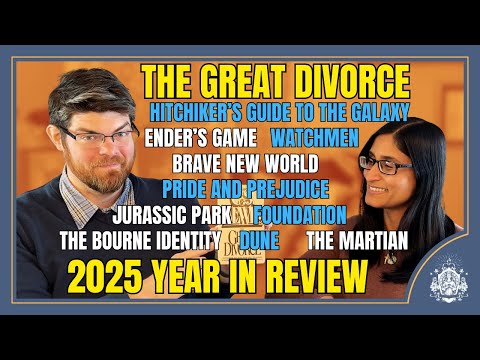
C.S. Lewis, The Great Divorce, and a Retrospective of the 2025 Book List
What happens when you read C.S. Lewis's vision of purgatory through the lens of an entire year's worth of literature?
June 2025
Meeting Date: 6/30/2025
By Michael Crichton
Natural Law and the Limits of Power
Michael Crichton's thriller explores humanity's relationship with creation and the dangers of playing God. A cautionary tale about hubris, the limits of human knowledge, and our role as stewards of creation.
As an Amazon Associate, we may earn a commission from qualifying purchases made through our affiliate links at no additional cost to you.
"The universe unfolds in God, who fills it completely. Hence, there is a mystical meaning to be found in a leaf, in a mountain trail, in a dewdrop, in a poor person's face. The ideal is not only to pass from the exterior to the interior to discover the action of God in the soul, but also to discover God in all things... The entire material universe speaks of God's love, his boundless affection for us. Soil, water, mountains: everything is, as it were, a caress of God."
- Laudato Si', papal encyclical of Pope Francis (excepts from para. 84 & para. 233)
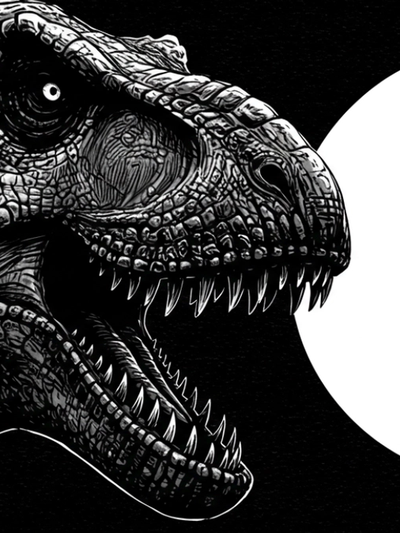
JURASSIC PARK is a book about a theologian disguising himself as a mathematician. Also there are dinosaurs.
So far this year we have explored themes of how man relates to God, and how man relates to neighbor. Now we turn our attention to how man is called to relate to God's creation-the natural world. The Lord specifically gave mankind dominion over the earth and all its creatures. What does "dominion" mean, and where are our limits? To answer this question, we must go back to the beginning, Genesis 1:26-28:
"Then God said, "Let us make humankind in our image, according to our likeness; and let them have dominion over the fish of the sea, and over the birds of the air, and over the cattle, and over all the wild animals of the earth, and over every creeping thing that creeps upon the earth.
So God created humankind in his image,
in the image of God he created them;
male and female he created them.
God blessed them, and God said to them, "Be fruitful and multiply, and fill the earth and subdue it; and have dominion over the fish of the sea and over the birds of the air and over every living thing that moves upon the earth."
- Genesis 1:26-28
God's directive to Man was not a warning to leave the natural world untouched-like the Gospel parable of the servants entrusted with their master's talents, man is expected to properly invest and develop God's property. Stewardship is not about merely safeguarding the goods that have been entrusted to us, but actively ensuring that we have increased its value. In contradiction to many modern positions about how humankind interacts with their environment, the Lord expects us to make our mark and change the natural world to support our reproduction. Indeed we are called to make the entire natural world effectively serve the successful thriving of the human race.
But this is obviously not a call to the rapacious, consumerist violation of the Earth for our personal gratification. We are supposed to make good, pleasing changes that glorify God. The master in the Gospel parable did not turn over his talents for his servants to personally use them to multiply their short term pleasure. They were never to forget that the talents do not belong to them. Every effort to yield a bounteous return had to be constrained by the master's definition of "bounty." The master is only satisfied if he is given back more of what he gave in the first place.
The good servant recognizes that the master's definition of bounty is not self-serving. The master does not enrich himself at the expense of his servants. Rather the master's aim is to create an estate that can support his entire household well. The servants who understand that they are serving the common good are rewarded with more opportunities to participate in the master's own life-to enter into his joy. The servant who works to enrich the master, not himself, is ultimately acting out of the most enlightened self interest.
This view of man's dominion over the earth is a recognition that we are called to the highest honor out of all of God's creation: to co-create with Him. Our job is to finish the work of the Lord and sanctify the natural world. We order it and make it serve us, in order to serve Him. Every object, every aspect of creation has been specifically given to us by the Lord-a talent entrusted into our hands-in order to do with it what He wills. There isn't a leaf or a tree or an inch of dirt that isn't stamped with a divine directive. We are here to reverently look for that directive and promptly follow it, for the glory of God.
In other words, we are called to have a sacramental worldview. In Catholic theology, a sacrament is a visible sign of the invisible grace of God. These graces are not only found in the seven sacraments-as St. Thomas Aquinas explains in much of his work, graces are evident in all of the created order. This is a theocentric worldview: everything in existence points to the Creator. The very fact that there is something rather than nothing is evidence of the existence of God. In sacramental theology, our every interaction with the natural world (and each other) must be imbibed with a constant, conscious recognition that God made the object of our attention, and a desire to learn what He would have us do with it.
Although the Catholic Church is commonly denigrated as anti-science, and full of superstitious spells and backwards rejection of reasoning, nothing could be further from the truth. This sacramental worldview has in fact been the basis of scientific discovery, and the reason that Christendom came into existence in the first place. The modern university system and the systematization of academic research was founded by the monastic tradition: the most groundbreaking scientific discoveries of the world have been made by Catholic religious and laypeople, including Nicolaus Copernicus, Andr�-Marie Amp�re, Louis Braille, Gregor Mendel, Louis Pasteur, Georges Lema�tre, and many others.
The Catholic promotion of science rests on perfect logic: the Lord is glorified when we seek to better understand and love His creation. Science is about seeking truth, and seeking truth is defined as a quest to see the world through God's eyes. The more we know about the natural world, the more competently we can do His will. Scientific discovery and research is a beautiful form of worship, and it is necessary if we are to fulfill our command to sanctify the Earth and give the Lord a good return on His investment. We explore the world under God's direction, and seek to know as much truth as possible so we can do His will.
This sacramental worldview, functioning beautifully for a good fifteen hundred or so years, was upended with great fury during the post-Reformation era and the Enlightenment. As the Catholic Church was attacked for controlling the message of Christ, the rallying cry was that every man should be free to interpret Jesus for himself. At the same time, the notion of sacramentality was criticized as giving a stranglehold of power to the clergy-after all, only the ordained could turn bread and wine into the body and blood of Christ. To reduce the influence of the Church, the legitimacy of the sacraments themselves was questioned. Perhaps the sacraments were just a way for the Catholic Church to keep us dependent on a man-made institution, and the entire notion of sacramentality is an unjust limit on human freedom.
Thus the Enlightenment, an era of intellectual and philosophical thought, flowed naturally from the Reformation-the idea that anyone could interpret the Lord's message for themselves quickly progressed to exploitation of the Word for personal gain. Christianity became a potent tool for political control, and combined with a degradation of the sacramental worldview. This caused a massive backlash against the very idea of man deferring to God at all, especially intellectually. For the first time in Christendom, mankind considered whether there was any sensible reason to try to look at the world through the eyes of the Creator, when perhaps our own rational faculties could do just fine on their own. Why should man be bound by religious dogmas and the medieval superstitions of the Church, when they seemed to impose absurd limits on rational inquiry for no good reason?
This line of thinking amounts to the servant beholding the talents in his hand-with a fading memory of the master, and a rising rebelliousness against the master's instructions-wondering why on earth it made sense to limit his use of the talents to comply with the directives of an absent and irrelevant superior. In fact, perhaps it was downright foolish to do so, and much more sensible, even moral, for the servant to come up with intelligent means to use the talents to enrich himself and serve his own direct interests.
This widespread breakdown of the sacramental worldview rapidly took over the rulers of Europe, who were in possession of a stable and large scale civilization built by Christ, but no longer bound by Christ's commands. The result was the Industrial Revolution-the greatest social and economic shift known to mankind.
The Industrial Revolution, in simplest form, was the idea of looking at the natural world-for example, perhaps a plot of common land-and wondering why it wasn't being used for the greatest possible economic return. Perhaps enclosing the area and using it for the most efficient development of capital made more sense than letting a bunch of peasants live off of it just to raise their families and do nothing much besides worship God...an entirely unprofitable pastime. Instead of wondering what God wanted human beings to do with this land, perhaps it was high time to wonder how the land could be used to serve man. The Industrial Revolution represented the shift from looking at the world to understand how to love it, to looking at the world to figure out how to best use and exploit it.
The development of industry and widespread displacement of peasants created the worlds first dense, overpopulated cities, and an economic underclass that was dependent on employment for survival. Women's industries, a source of economic leverage and means for women to contribute to societal structure as well as exercise agency, were decimated. The work of men, many of whom had been highly trained farmers, craftsmen and artisans, disappeared and was replaced by dangerous, soul crushing drudgery in factories and mines for upwards of eighty hours per week. Workers had no power against the owners of the factories and land. Women and children were exploited for labor-a new concept of commodifying the productivity of a human person without regard to their individual humanity. Alcoholism and addiction skyrocketed and family structure broke down. The displacement and resulting social ills occurred on a massive scale-before the Industrial Revolution, 90% of the population of Europe were farmers. In less than a hundred years, over 50% of the population lived in major cities, without possession of land or capital.
There was more money, more efficient agriculture to produce more food, and more people...but the people were a means to an end. The excess population existed not to glorify God, but to enrich a much smaller group of fellow people. Wealth and property ownership were increasingly concentrated. And while God commanded us to subdue the earth so that we could be fruitful and multiply, His directives involved doing so in a manner that served the common good. In God's plan, every human being is a means to his own end, and not the ends of another. Human beings are not supposed to be factory products, like in Brave New World-existing so that other humans can become enriched at their expense.
But God's plan clearly didn't respect the development of the modern economy. The goal of the new world, stripped of sacramental reverence for the Creator, was and is to wrest every bit of profit and pleasure out of creation. Over the last five hundred years, man has done so with an increasing impunity and certainty that he has total control over the natural world, to do with it as he wishes. The only limit is his imagination-a faculty not illuminated by anything as constraining as God's will.
Natural Law: The Unavoidability of Reality
This brings us to the present day, and back to Jurassic Park, where the character of Ian Malcolm basically acts as a mouthpiece for some very surprising, breathtakingly Catholic takes on science, economics, and philosophy.
Malcolm harshly upbraids John Hammond, owner and creator of the park, for his willingness to use science for frivolous, mercenary economic gain. However Malcolm also indicts the fairly penniless Drs. Grant and Sattler-the "pure" scientists-as equally mercenary. Malcolm opines that for about five hundred years now, human beings have lied to themselves that science is about the desire to discover truth. Rather, he charges, it is about pride and the satisfaction of the ego. Human beings simply wish to prove they can control matter and make their mark on the world. They are not "discovering truth," but rather wanting to discover the heights of their own power. Malcolm accuses scientists of only satisfying their desire to know whether they could, but not whether they should.
The character of Malcolm falls short of pointing out that the "should" comes from God's law, but the gist of his entire contribution to the storyline of Jurassic Park is recognition of the Creator as having all true power. Chaos theory is a literary device used to stand for a simple truth: Man is not God, and only God is in control. Even if one does not wish to acknowledge God, His signature is undeniably imprinted into the very fabric of the rules of the universe-otherwise known as the natural law. The natural law is the embedded principles of human nature, justice, rights, responsibilities, and moral order that are derived from observation of the natural world. We can know and understand these intrinsic laws from direct interaction with the world, we ignore them at our peril.
One fundamental edict of the natural law is that human beings cannot control reality. Pretending we can do so does not make it true; it is about as effective as jumping off a building while insisting that gravity isn't real. Human beings do not dictate the terms of this world. We didn't build it. We can manipulate the material world, to an extent. But we cannot create it out of nothing. We can make boats, but not oceans. Even if we become frightfully clever with how we manipulate the material world, we are in a lot of trouble if we start believing this makes us capable of altering reality. In fact without submitting to God's directives in how we interact with the natural world, we end up manipulating creation in ways that are totally beyond our ability to understand or predict. All we do is end up with very bad, very unexpected outcomes. Like Satan. And John Hammond.
The natural law, then, brings us right back to God. Every disastrous attempt to play God ends up decimating us and delivering us to slavery. From there we have an opportunity to repent and begin again with humility, observing the natural order and turning back to trying to understand how the Creator made it, and why. And of course He is gracious and good enough to have given us His own revealed Word so that we don't endlessly stab about in ignorance. That is essentially a summation of much of the Old Testament. If we can get this part right, we can be ready for the salvation of the New Testament.
JURASSIC PARK is in many ways (most likely entirely inadvertently) a brilliant reimagining of the story of the Israelites, and also a compendium of Catholic apologetics on natural law and stewardship of the Earth. Not bad for a dino tale.
1. Do you think John Hammond really cared about advancing science? Did he really care about making children happy? His motives do not seem clear. Why do you think he did what he did?
2. What did you think of Ian Malcolm as a device for injecting moral philosophy?
3. The character of Dr. Wu, the lead geneticist, is presented in a neutral light for much of the novel. Where do you think he crossed the line into amoral and immoral scientific work?
4. Does bioengineering and methods of genetic manipulation violate God's law? How is it different than a field like optometry? What are virtuous uses of science to manipulate and change the world, and what are sinful uses? What is the dividing line?
5. Michael Crichton claimed that he was a deist, but against religious dogma. He also criticized environmentalism as a false religion. Pope Francis has similarly been criticized for endorsing environmentalism as a religion. How do the views of God and stewardship of the environment in JURASSIC PARK mesh with the teachings of the Church?
What happens when you read C.S. Lewis's vision of purgatory through the lens of an entire year's worth of literature?
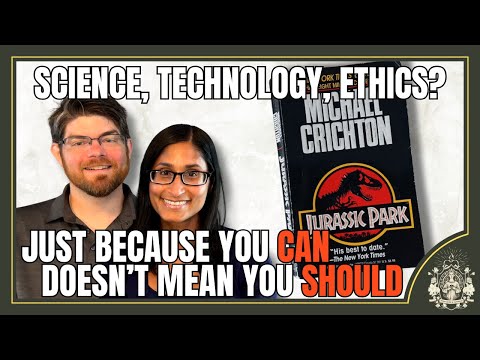
Michael Crichton's cautionary tale examined through Catholic social teaching and natural law.
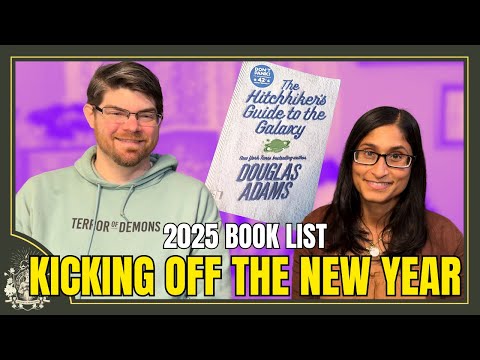
Introducing our 2025 reading challenge and how every great book can be read through Catholic eyes.
Sign up to receive study guides and participate in our monthly book discussions!
Join the Book Club