
VIDEO
The Martian: Virtue as the Basis of Skill | A Catholic Take
Tyler and Sadie from the Great Catholic Book Club explore The Martian by Andy Weir—a story about attitude, virtue, and the grace beneath impossible situations.

October 2025
Meeting Date: 10/27/2025
By Andy Weir
The Use of Will and Intellect
Andy Weir's survival story celebrates human ingenuity, hope, and the refusal to give up. A joyful reminder of humanity's call to steward creation and use our God-given reason to overcome seemingly impossible challenges.
As an Amazon Associate, we may earn a commission from qualifying purchases made through our affiliate links at no additional cost to you.
"Freedom is the power, rooted in reason and will, to act or not to act, to do this or that, and so to perform deliberate actions on one's own responsibility. By free will one shapes one's own life. Human freedom is a force for growth and maturity in truth and goodness; it attains its perfection when directed toward God, our beatitude."
- Catechism of the Catholic Church (para. 1731)
Imagine you're Adam. You open your eyes as you've freshly come into being. All around you is an alien environment that you're not remotely familiar with. Land formations, vegetation, creatures all around...but no sign of any nicely constructed home with a fridge full of food. You've got a mind preprogrammed with all sorts of survival tactics and problem-solving skills, and none of them have ever been put to use in this kind of situation. You'd better start figuring things out now, if you want to survive.
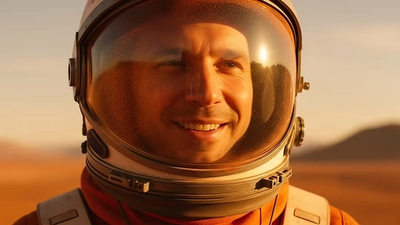
There's a possibility that Adam's first words mirrored Mark Watney's at the beginning of THE MARTIAN.
Before getting into Andy Weir's beautiful work, a word about the Beginning of mankind: There are many aspects of life and our nature that are the result of our fall from grace-despair, hopelessness, resentment, stunted imagination, disregard for human life, disastrous short sightedness, concupiscence, and more. The curse of the fall, and the result of sin entering the world, resulted in a mutilation of our perceptions and loss of connection to divine insight.
But a change in perception is not a change in material circumstances. Much of the world itself, and how we function in it, did not change as a result of the fall. From the beginning, the design of the earth was unfinished. We were created to work-to subdue the earth and to multiply. It would be our job to deal with animal life, handle the problem of natural elements, come up with solutions for food, water, shelter, clothing (for weather, of course), medical care, etc. We were made to complete the Lord's work of creation, given the incredible blessing to participate with Him in co-creation. The job was never supposed to be easy.
And most importantly, co-creation did not end at how we were to finish shaping the natural world. The most important aspect of God's creation, that He privileged us to join in, is the very work of completing ourselves. We were made unfinished on purpose-the refining process to complete a human person is unique to everything God ever created. Unlike the angels, we did not come into being as finished intellectual beings. Instead, being made in His image and likeness, we are perfected only by personal choice and full participation. We exist in time in order to undergo the process of becoming. Every experience of problem solving, deliberation, and trial is part of this process of progressively growing the self.
Even before the fall, Adam and Eve were like soft, uncooked, untested dough. They weren't ready for divine union. The serpent promised them that they could be like God, because in their state at the time, they obviously were not there. But it was always God's plan to shape mankind towards divinization. It was always our choice to do it or not.
Like in THE MARTIAN, the conditions of the world-the need for work, the role of relationships, facing challenges and difficulties-are designed not to torture us, but to help human beings learn to understand ourselves and how God made us. Adam's first tasks were quite similar to Watney's-both faced a sudden realization that they had better get extremely familiar with the requirements of life, and how to live well as a human person. There is nothing quite like the intimate experience of suddenly realizing you are completely responsible for getting to know what you need and how the Lord has made you.
Both Adam and Watney came to the world as fully grown men, with all the skills and knowledge necessary to handle the situation before them, if they want it enough. Both had never faced these conditions, and the learning curve was steep. How do you apply what you only know in theory? Adam and Watney had full use of their intellect, and the freedom to learn this information about themselves through trial and error. These are the conditions for developing a type of self-awareness that cannot be obtained in any way except by living through it. Watney, like Adam, had to face himself and live with himself in a situation where that kind of personal encounter is unavoidable. No matter how many times a man tells himself: "I am a botanist," or in the universal of Adam's case: "I am a human creature," nothing drives home a sense of identity quite like realizing it is your source of existence.
And once man has discovered what he is, he then realizes it is not good to be alone. He needs the other. He needs Eve-a representation of the presence of other human beings. No one can survive alone, it's not possible. As we explored in BRAVE NEW WORLD, the human being is fundamentally relational. Adam needed Eve-so Watney needed all the human beings that helped him survive and come back home. Human beings need each other in order to be saved-we have to help each other. We cannot save ourselves, and of course our salvation does not come from any other human person. But salvation comes from joining together in the body of Christ. We need this coming together to become what God made us to be.
Thus far in the book list, we have analyzed many means of misuse of the will: deifying the self, reliance on human intellect, a mistaken idea that human beings can predict and control reality, the devastating trap of pride and the false self, all the ways that we become slaves when we try to use our free will and intelligence to play God.
It seems like a good time to now turn to how we should use our will and intellect.
Simply put, we are to surrender it to God's will. But what does that mean?
Oftentimes this directive to surrender the will to God is seen as command towards empty passivity. To let go of the self and turn your will to God is misinterpreted as becoming a brainless tool. Your thoughts and feelings, your ambitions, your personality...they're all problems to silence and suppress so that you can be a one-dimensional obedience machine that just does what authority tells you. Obedience to God has often been exploited by bad actors as a call to servility in the face of authoritarianism. This view of surrender preaches that to even have a sense of offended dignity within one's heart is a sin. You're just supposed to shut up and smile and let the world walk all over you, lest you be accused of acting like you think you're God.
Nothing could be further from the truth. Surrender to God's will is the opposite of passive subjugation. Remember that God is that which frees us from slavery. The hallmarks of surrendering the intellect and will to God are that these faculties actually come alive for full use. God's rules give us freedom. Surrendering to God means we engage in the very active task of studying His communications very carefully, and analyzing how to apply them in a given situation. This is an ongoing decision, made new every moment and in every new set of circumstances. We use our free will to consciously and intentionally choose to do things God's way instead of other ways we might be tempted to try. We make the commitment to give His advice and direction a shot again and again, even if, in the moment, we don't understand His logic or how it could possibly solve the problem. We commit our intelligence to trying to meet His mind and rise to His level, thereby elevating our understanding.
This is far from passive. It is a continuous, sometimes gut-wrenchingly arduous exercise in maintaining conscious contact with the Lord, through living prayer, study and meditation on His Word, and careful moral analysis of every situation we find ourselves in. And surrender means that when we fail in this-which we will, perhaps a thousand times a day-that we get right back up and try again.
This is what it means to give our free will and intellect to God, and finally use it to its fullest potential. The rewards are incalculable: creativity, problem solving, a sense of humor, and gratitude.
Every time we make use our free will to choose God, we grow in boundless creativity. Indeed there is no creativity outside of obedience to the will of God. If we rely on our own ideas, or the ideas of other human beings, we quickly find that the human mind, cut off from the divine intellect, is miserably small and unimaginative. The best ideas we have come up with to solve problems generally devolve into some form of genocide. For example, without God to illuminate our minds, some think the solution to unwanted children is to end their lives in the womb. There is no capacity for the kind of real problem solving that we are capable of when we allow the Lord to fully turn our brains on. We can only come up with devastatingly stupid things. But with God, all things are possible in a very real and practical sense-because we can actually think, and creatively solve problems with perfect charity.
Another critical use of free will is our choice of attitude. Mark Watney chose to be a funny guy. This isn't just a small aside to his survival. The person that orients himself towards cheerfulness and positivity is using his will in the most significant way possible. Our perspective is everything-again, it is not the material circumstances that were affected by the fall. It was our attitudes and perceptions. This act of the will is on us. God will give us the strength and grace to face all difficulties with hope and joy, but it is up to us to take Him up on it. He doesn't force us to have a sense of humor. Its up to us to decide how we want to show up for our lives. As joyless jerks, half in the grave at any moment? Or as triumphant, happy warriors that are determined to milk every situation for all the virtue and maturity we can wrest out of it?
And that is the final gift of the proper use of free will; gratitude. Life is a gift. Every trial, every bit of adversity and suffering...its all gold. This is the stuff that turns us into real people with depth and beauty. Mark Watney did not have to survive on Mars and fight for his life. He got to. He got to experience the coolest, most unique situations of danger. He got to solve problems that no human person has ever gotten to solve. He got to plumb the depths of his knowledge and intelligence and learn exactly how much reverence he has for his life. Maybe each given day or hour wasn't imbibed with this appreciation, but overall it would be completely awesome to be stranded on Mars and have to figure out how to survive. What a lucky guy.
And what a lucky guy Adam was. The best news is that we are just as lucky. The proper use of the will is to act like we know that.
1. Human beings were given dominion over the earth and commanded to subdue it. Do you think this dominion and command extends to space travel? What are the moral implications of space travel and colonizing other planets? Does the Lord call us to do this, or at least permit it? Why or why not?
2. What do you think of Commander Lewis' many moral choices, first the decision to leave Watney behind, and then all her choices during the rescue. What do you think her obligations were to a single member versus the entire time? Do you think her decisions and moral reasoning were correct in any or all of these cases? Why or why not?
3. When the crew decides to rescue Mark, do you think they are more motivated by guilt or loyalty? What are the moral differences between the two? Is it wrong to do good out of guilt? Is some degree of guilt or obligation an inevitable part of being human and making moral choices? Or is this something that virtue is supposed to cure? Why or why not?
4. From the beginning of his ordeal, Mark calculated how long he would be waiting for possible rescue. This foreknowledge of an ending helped him endure the situation, as well as motivated him to keep going when he had little hope. Do you think there are parallels to when Jesus told the Apostles (and us, today) that he is coming back, or that he has already overcome the world? How does knowing the end of the Christian story help us sustain our hope in this life?
5. In THE MARTIAN, a NASA psychologist explains that Mark was chosen as much for his personality as his technical skillset. The role of attitude and humor are very prominent in the novel, and humor is tied to hope. If Mark loses hope, both he and the NASA team believe he would choose voluntary suicide. What do you think of the connection between humor and hope? Do you think the upswing of suicide (including medically assisted suicide) is as much due to the loss of humor as the loss of hope? Why or why not?
Tyler and Sadie from the Great Catholic Book Club explore The Martian by Andy Weir—a story about attitude, virtue, and the grace beneath impossible situations.
The importance of training to be a husband and a father

What happens when you read C.S. Lewis's vision of purgatory through the lens of an entire year's worth of literature?

Introducing our 2025 reading challenge and how every great book can be read through Catholic eyes.
Sign up to receive study guides and participate in our monthly book discussions!
Join the Book Club